
August 2, 2026
AC Repair vs Replacement in Tampa, FL: When Is Repair No Longer Worth It?
Table of Contents
Most homeowners eventually face the same question: should you repair your air conditioner or replace it?
Sometimes the answer is easy. A newer system with a minor problem may only need a simple fix. Other times, rising energy bills, repeated breakdowns, or an aging unit can make the decision much harder. If your system is already struggling, professional AC repair in Tampa can help identify whether the issue is a simple fix or part of a larger system problem.
In Tampa, air conditioners work harder than they do in many parts of the country. Long cooling seasons, high humidity, and nearly year-round operation put extra wear on cooling equipment and can shorten its lifespan.
This guide explains when repairs usually make sense, when replacement becomes the better long-term investment, and which warning signs Tampa homeowners should pay attention to before spending money on major repairs.
Quick Answers About AC Repair vs Replacement
Repair usually makes sense when:
- The system is under 10 years old.
- The problem is relatively minor.
- This is the first major issue.
- Repair costs are reasonable.
- Cooling performance remains good.
Replacement may make more sense when:
- The equipment is 10 to 15 years old.
- Major components have failed.
- Service calls are becoming more frequent.
- Energy bills continue rising.
- Humidity and comfort problems are getting worse.
Common guidelines homeowners use include:
- The $5,000 Rule
- The 50% Rule
- System age
- Repair history
- Overall comfort and efficiency
The sections below explain how each of these factors can affect the decision.
When Should You Repair Your AC?
Not every problem means you need a new system.
Many issues involve relatively inexpensive parts and can be fixed without replacing the entire unit. Repairs are often the better choice when the system is still fairly young and has otherwise been performing well.
Repair may make sense when:
- The system is under 10 years old.
- The problem involves a capacitor, contactor, thermostat, or fan motor.
- Cooling performance has been consistent.
- This is the first major issue.
- Repair costs are relatively low.
Many homeowners are surprised to learn that a failed capacitor or blower motor does not automatically mean the entire system is wearing out. A younger unit with one isolated problem may still have many years of life remaining.
If your system is still relatively young and the issue is isolated, professional AC repair in Tampa may be the most cost-effective option.
When Is AC Repair No Longer Worth It?
Eventually, there comes a point where continuing to invest in aging equipment stops making financial sense.
That does not mean every expensive repair requires replacement. However, when breakdowns become more common and comfort problems continue returning, homeowners often end up spending more money without solving the underlying issue.
Replacement may become the better long-term investment when:
- Repairs are becoming more frequent.
- Utility bills continue increasing.
- Indoor humidity remains high.
- Certain rooms stay uncomfortable.
- Major components have failed.
- The equipment uses outdated refrigerant.
- The system is approaching the end of its expected lifespan.
The goal is not simply to keep the unit running. The goal is to maintain reliable comfort without repeatedly spending money on an aging system.
If you're wondering what common repairs typically cost, our guide to AC repair costs in Tampa explains the diagnostics and repair expenses homeowners commonly encounter.
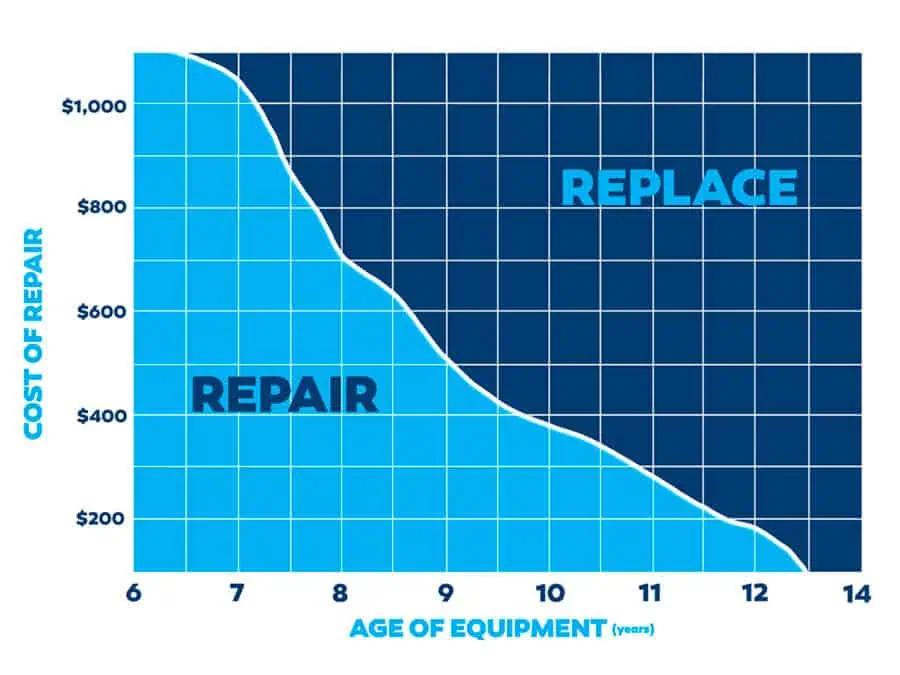
How Old Is Too Old for an AC Unit?
Age alone does not determine whether a system should be replaced, but it is one of the biggest factors.
0-7 Years
Most systems still have substantial life remaining. Repairs are usually worthwhile.
8-12 Years
This is often the gray area. Some systems continue performing well, while others begin experiencing larger repairs and declining efficiency.
13-15 Years
Many Tampa systems begin reaching the end of their practical lifespan because Florida's climate forces equipment to run much longer than it would in cooler parts of the country.
15+ Years
At this stage, major repairs often become harder to justify financially, especially if energy bills are increasing and comfort problems are becoming more noticeable.
If you're unsure where your equipment falls, our guide on how long AC units last in Tampa explains how Florida weather, maintenance history, and airflow affect lifespan.
Major Repairs vs Minor Repairs
One of the biggest factors homeowners should consider is the type of repair involved.
Minor Repairs
Minor repairs are generally affordable and do not automatically mean replacement is needed.
Examples include:
- Capacitors
- Contactors
- Thermostats
- Fan motors
- Drain line cleaning
- Electrical connections
Major Repairs
Major repairs involve expensive components and often occur later in a system's life.
Examples include:
- Compressor replacement
- Evaporator coil replacement
- Condenser coil replacement
- Large refrigerant leaks
- Multiple component failures
| Problem | 5-Year-Old Unit | 10-Year-Old Unit | 15-Year-Old Unit |
|---|---|---|---|
| Capacitor | Repair | Repair | Repair |
| Fan motor | Repair | Repair | Usually repair |
| Evaporator coil | Repair | Depends | Usually replace |
| Compressor | Repair | Depends | Usually replace |
| Refrigerant leak + coil | Repair | Depends | Replace |
| Multiple major problems | Depends | Replace | Replace |
A seven-year-old system with a bad capacitor is very different from a fourteen-year-old system with a failed compressor.
Does Your System Use R-22 Refrigerant?
Older systems manufactured before 2010 may use R-22 refrigerant, sometimes called Freon. Production of R-22 has been phased out, making it more expensive and harder to find.
A refrigerant leak means cooling fluid is escaping somewhere in the system. Finding the leak, repairing it, and replacing the lost refrigerant can become costly on older equipment.
Because of that, a major repair involving an R-22 system may not make financial sense, especially if the equipment is already approaching 15 years old.
What Is the $5,000 Rule?
Many HVAC professionals use the $5,000 Rule as a general guideline.
Multiply the age of the system by the repair cost. If the total exceeds $5,000, installing new equipment often becomes the better long-term investment.
Example
- 12-year-old system
- $700 repair
12 × $700 = $8,400
This rule is not absolute, but it gives homeowners a simple way to compare the cost of continuing repairs with the value of upgrading.
What Is the 50% Rule?
Another guideline homeowners sometimes use is the 50% Rule.
If the repair cost exceeds half the price of a new system, many people begin considering replacement instead.
For example, spending $4,000 to repair equipment that could be replaced for $8,000 may not provide the best long-term value.
Age, comfort problems, and energy efficiency should also be considered alongside repair costs.
Signs Replacement May Make More Sense
Most systems do not fail overnight. Warning signs often appear long before complete breakdown.
Common signs include:
- Rising electric bills
- Uneven temperatures between rooms
- Excess indoor humidity
- Longer cooling cycles
- Frequent service calls
- Loud noises
- Weak airflow
- Trouble keeping up during hot afternoons
These symptoms may indicate that the system is losing efficiency or that multiple components are beginning to wear out.
If these issues are becoming more common, it may be time to explore your options for AC replacement in Tampa.
Can a New System Lower Energy Bills?
In many cases, yes. Modern air conditioning systems are significantly more efficient than older equipment.
Homeowners may notice:
- Better humidity control
- More consistent temperatures
- Improved airflow
- Quieter operation
- Lower energy consumption
However, proper sizing and installation matter just as much as efficiency ratings. Installing a new system will not automatically solve comfort problems caused by poor airflow or duct issues.

How Long Does AC Replacement Take?
Most residential AC replacements in Tampa are completed within one day.
Timing depends on:
- System size
- Ductwork condition
- Electrical upgrades
- Permit requirements
- Equipment accessibility
- Startup testing and airflow adjustments
Homes requiring duct modifications or electrical improvements may take longer.
If you're considering upgrading, our guide to AC installation in Tampa explains what homeowners can expect during the process.
AC Repair vs Replacement FAQ
Is it better to repair or replace an AC unit?
It depends on the age of the system, repair costs, and overall performance. Younger systems with isolated issues are usually worth repairing, while older systems with repeated problems may benefit from replacement.
When is AC repair not worth it?
Repair may stop making sense when major components fail, costs continue adding up, or the system is nearing the end of its lifespan.
What is the $5,000 Rule for AC systems?
Multiply the age of the equipment by the repair cost. If the total exceeds $5,000, upgrading often becomes the better long-term investment.
How old is too old for an AC unit?
Many systems in Tampa begin reaching the end of their practical lifespan around 10 to 15 years, although maintenance history and operating conditions also matter.
How long does AC replacement take?
Most residential installations are completed within one day, although homes requiring ductwork or electrical upgrades may take longer.
Need Help Deciding?
If you're unsure whether it makes more sense to repair your current system or invest in a new one, Rolando's HVAC can help.
We provide honest recommendations, professional inspections, and residential HVAC services throughout Tampa and Town 'n' Country.
Call (813) 373-6804 today for a free estimate.

Rolando Mojarrieta is the founder of Rolando’s HVAC, a licensed HVAC contractor based in Town ‘n’ Country and serving the greater Tampa Bay area. With over 15 years of experience in residential air conditioning, heat pump installations, and energy-saving upgrades, Rolando is committed to helping Florida homeowners stay comfortable year-round. License #CAC1820272.